Welcome to AdoptAI
Artificial Intelligence Organizational Adoption is our core framework for helping businesses bring AI from concept to execution with precision and efficiency. Designed to meet the strategic and operational standards of top consulting firms like McKinsey, BCG, and Bain, AdoptAI provides a structured yet flexible approach to adoption. Through tailored solutions, we guide organizations in aligning AI with their business goals,
streamlining implementation, and driving measurable outcomes. With AdoptAI, clients gain a clear pathway to harnessing AI's potential while building the capabilities needed for long-term success.
"The difference between companies that thrive with AI and those that struggle isn't the technology—it's the systematic approach to implementation." - Fortune 500 AI Strategy Report
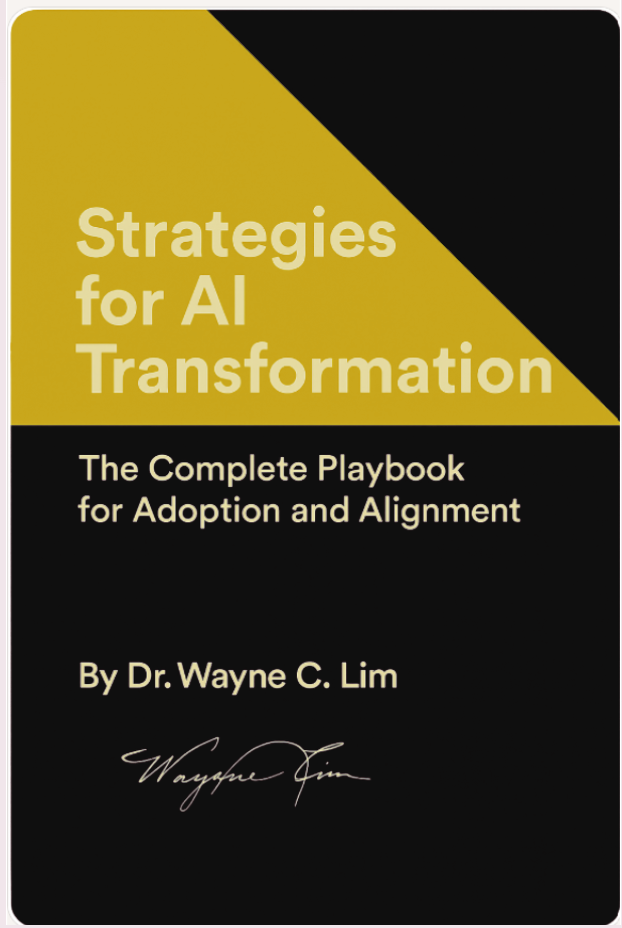
This book walks organizations through how to adopt AI.
It outlines the key steps from exploration to integration,
shows how to align AI with business goals, and includes real examples,
common missteps, and planning tips to support confident action.
AI adoption efforts have a 95% failure rate (MIT), making AI adoption strategy especially important
ABOUT US
At AdoptAI, we believe that successful AI adoption starts with clarity, strategy,
and measurable impact. Our mission is to help organizations transform AI from an
abstract ambition into a practical, scalable reality.
Dr. Wayne C. Lim – Founder
Led by Dr. Wayne C. Lim, AI Transformation Strategist and ex-Bain consultant with a passion for making artificial intelligence accessible and effective for real-world businesses. He holds a doctorate from Case Western Reserve University, an MBA from Harvard University, completed graduate coursework at MIT & Stanford University, and a bachelor's degree in Mathematics from Pomona College. He is also Certified in SpikingAI™,
a globally recognized credential awarded for advanced proficiency in AI strategy and innovation.
SERVICES
At AdoptAI, we help organizations turn AI ambitions into real-world results.
Our services combine diagnostic tools, economic modeling, structured roadmaps,
and hands-on enablement so leaders can move from exploration to scaled, repeatable impact.
"Too many leaders see their workforce AI deployment as primarily a technology and data exercise. That perception couldn’t be further from the truth: Today’s AI remains intimately tied to human users, whose experience with the technology will be a principal determinant of its success or failure."
-J.P. Gownder, V.P., Principal Analyst, Forrester Research, Inc.
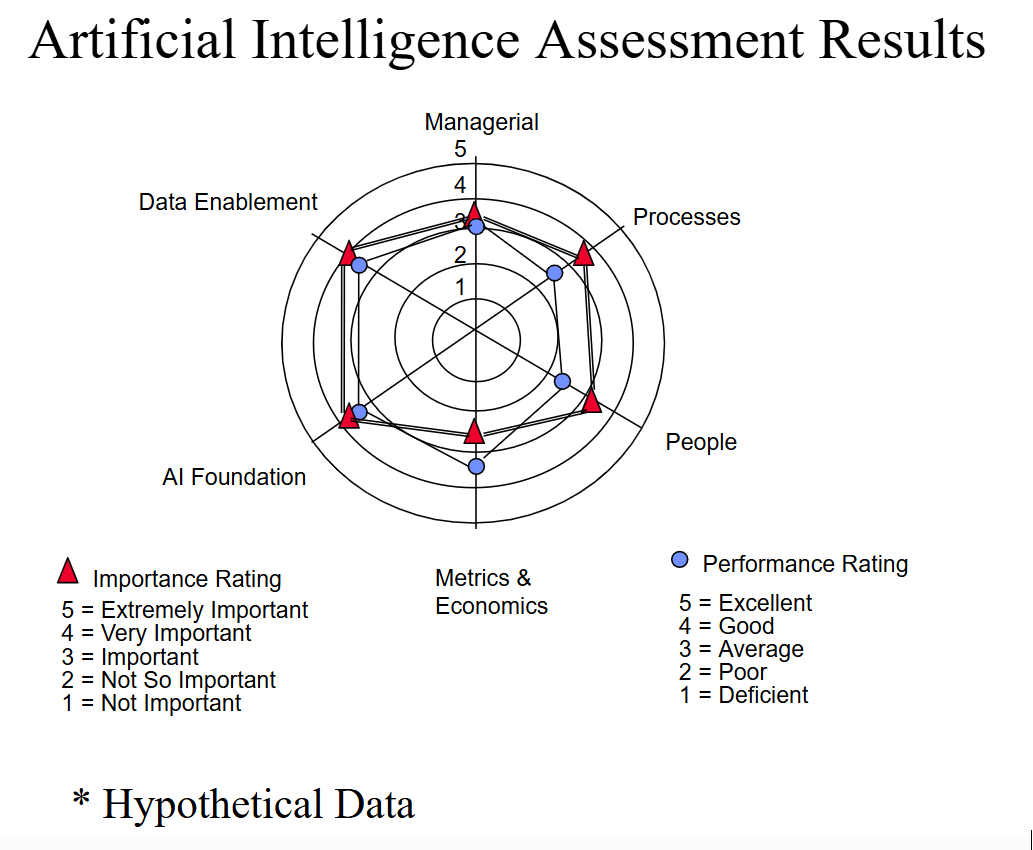
AI Readiness Assessment
A comprehensive tool for evaluating an organization's readiness for AI adoption across leadership,
processes, people, metrics, data, and AI foundations.
AI Economic & Metric Analysis
A structured approach to quantify how AI investments drive improvements in quality,
productivity, cycle time, and ultimately net income.
AI Adoption Funnel Barriers
A diagnostic framework that surfaces and categorizes the organizational obstacles
that prevent AI pilots from scaling into enterprise-wide capabilities.
AI Adoption & Institutionalization Model
A phased roadmap guiding organizations from AI exploration and pilots
through to full-scale, institutionalized AI use.
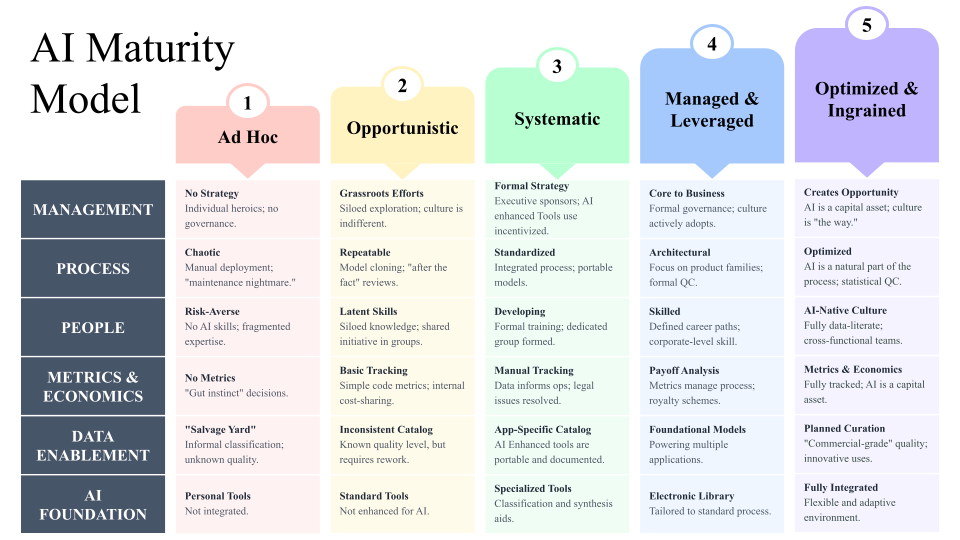
Maturity Evaluations
A framework for assessing current AI capability levels and defining a clear
progression path to more advanced stages over time.
AdoptAI Interactive Workshops
Dynamic, hands-on sessions where leaders review assessment results, align AI priorities,
define metrics, refine structures, and plan staffing for AI.
AdoptAI Marketing Literature
Strategic communication materials designed to articulate AI value and support
informed engagement across internal and external stakeholders.
AI Book
A practical guide that walks organizations through AI adoption from exploration
to integration with real examples, missteps, and planning guidance.
AI Use Cases
Explore how our AdoptAI framework has been applied across various industries to solve complex challenges,
reduce failure rates, and institutionalize intelligence. From efficiency gains to
new revenue streams, these cases demonstrate the power of a systematic approach.
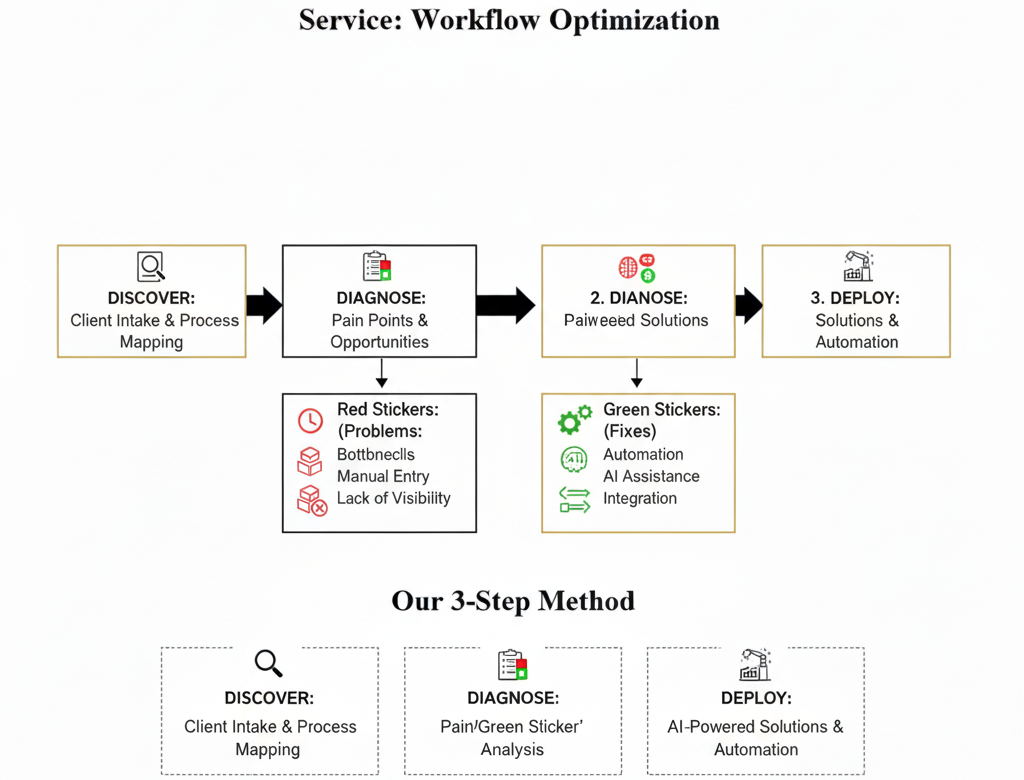
WORKFLOW OPTIMIZATION
This section highlights where the process can be improved or automated. Your responses help us quickly identify
steps that could be faster, simpler, Or supported by AI—reducing manual work, delays, and errors while improving visibility and control.
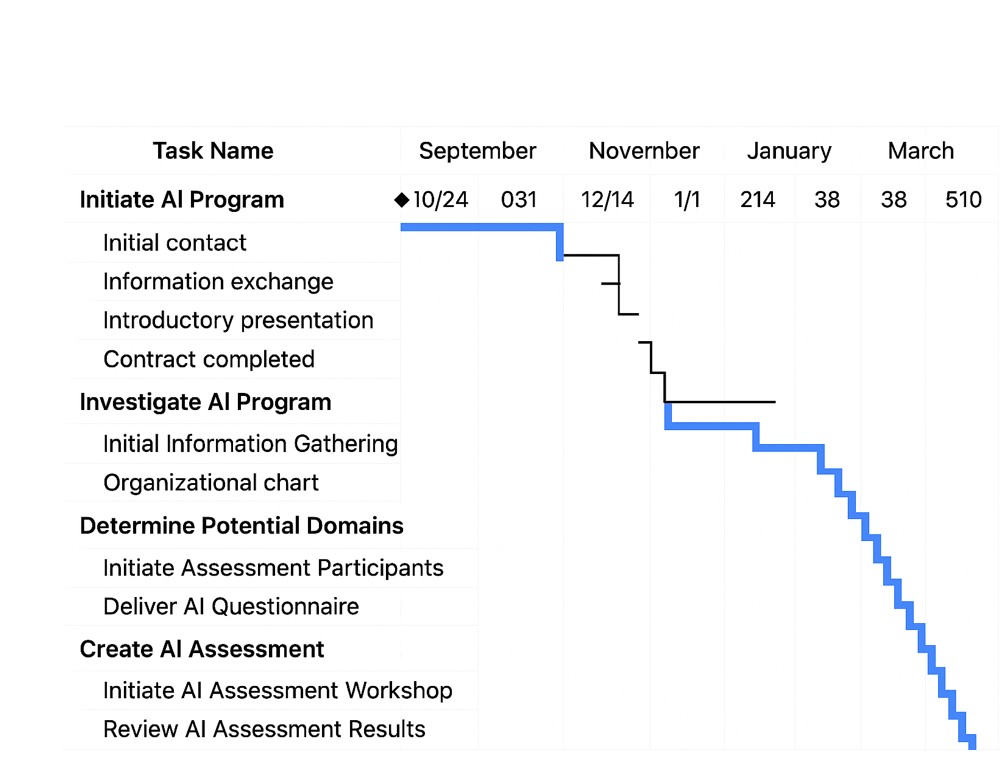
AdoptAI Project Timeline
A clear, step-by-step calendar mapping planning, alignment, piloting, training,
integration, and long-term scaling activities.
Infrastructure & Implementation Outline
A practical checklist of organizational, technical, and process requirements
needed to support AI adoption and integration.
AdoptAI Assessment Report
A clear narrative summary of where the organization is on its AI journey,
highlighting strengths, gaps, and next-step recommendations.
Service details
AI Readiness Assessment
A comprehensive tool for evaluating an organization's readiness for AI adoption.
It assesses critical dimensions such as Management, Process, People, Metrics &
Economics, Data Readiness, and AI foundation to ensure strategic alignment and
operational capability.
AI Economic & Metric Analysis
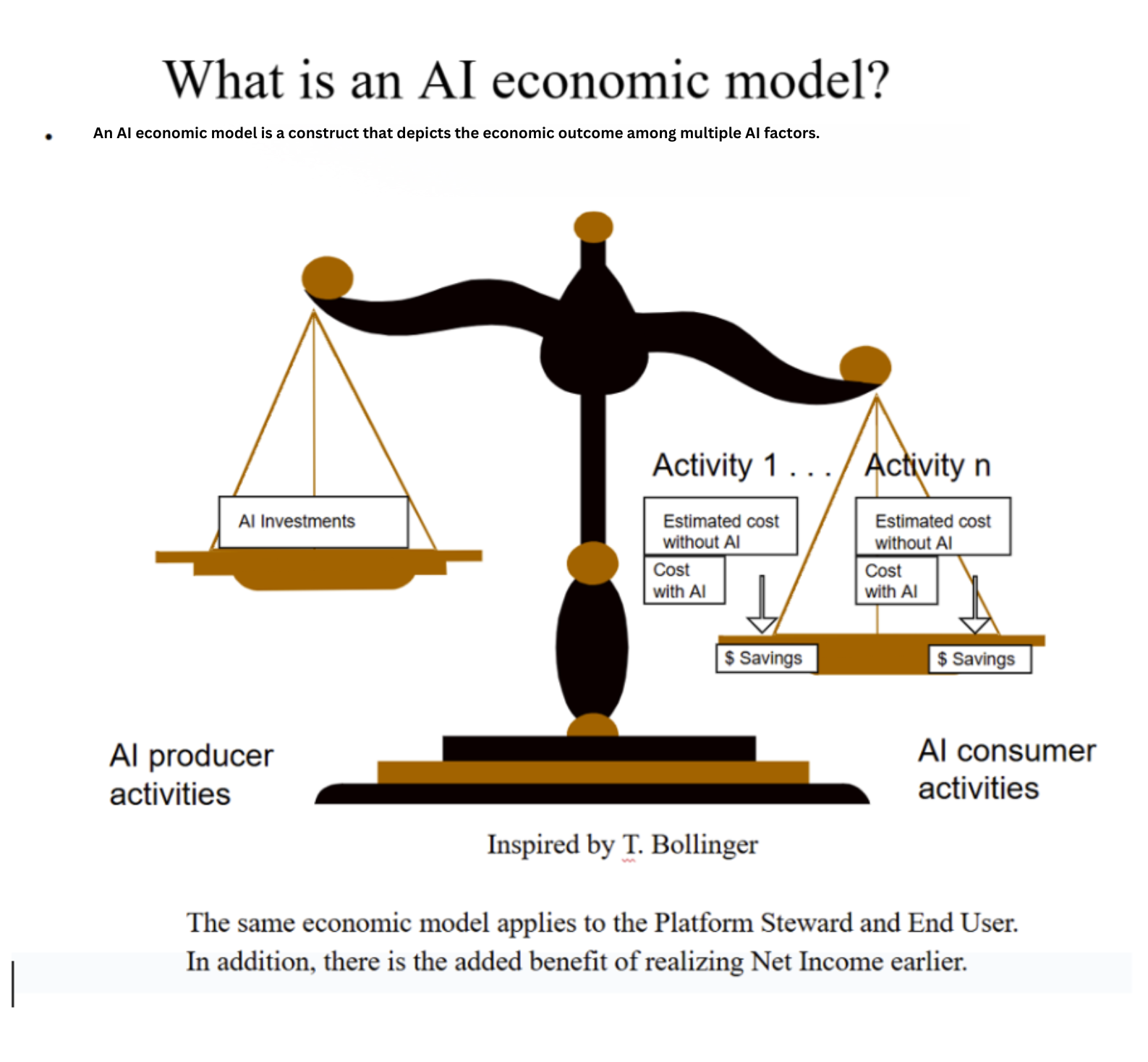
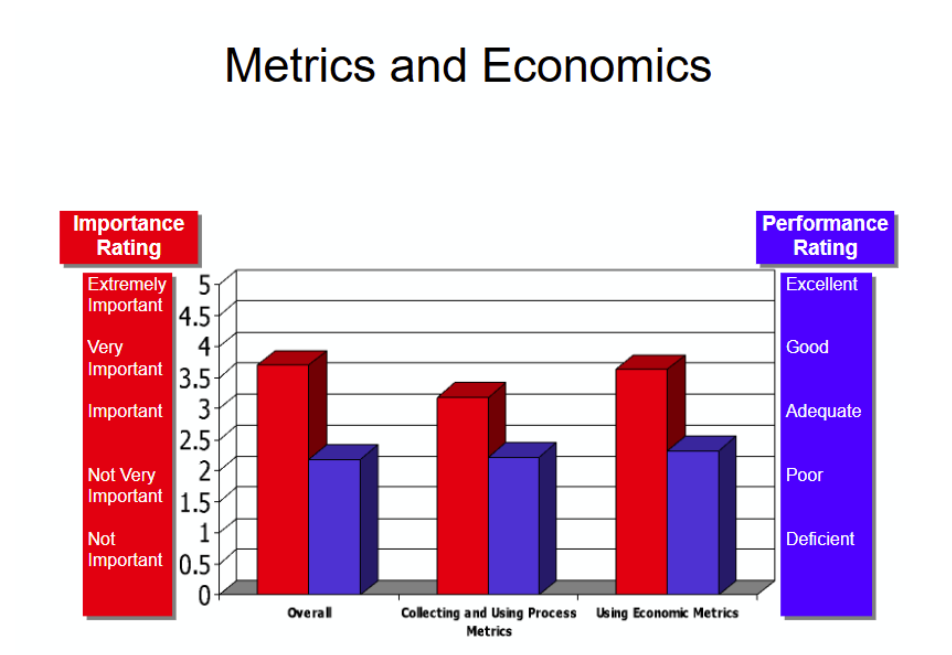
An AI economic model is a construct that depicts the economic outcome among multiple AI factors. A structured approach to quantify the financial and operational benefits of AI
adoption across an organization. It focuses on measuring improvements in quality,
productivity, and cycle time, while modeling how AI investments translate into
increased net income.
AI Adoption Funnel Barriers
A diagnostic framework that identifies and categorizes organizational obstacles to
successful AI adoption. It helps pinpoint root causes of AI implementation failures.
AI Adoption & Institutionalization Model
A structured, phased roadmap guiding organizations from AI exploration to full-scale
implementation.
Maturity Evaluations
A framework for assessing and advancing an organization's AI capabilities over time.
AdoptAI Interactive Workshops
A dynamic, hands-on session where organizations review assessment results, align AI
initiatives with business goals, define key metrics, refine organizational structures,
and develop staffing strategies.
AdoptAI Marketing Literature
Strategic materials designed to articulate the value of AI adoption and promote
informed engagement across stakeholders.
AI Book
A book that walks organizations through how to adopt AI. It outlines the key steps
from exploration to integration, shows how to align AI with business goals, and
includes real examples, common missteps, and planning tips to support confident action.
AI Book
Our case library highlights the transition from isolated AI pilots to
enterprise-wide adoption, showcasing measurable ROI and cultural transformation.
AdoptAI Project Timeline
A clear step-by-step calendar that maps out the process of adopting AI–starting with
planning and stakeholder alignment, and moving through piloting, training, integration,
and long-term scaling. This is designed to help teams stay organized, accountable,
and on track.
Infrastructure & Implementation Outline
A practical checklist of what a company needs to support AI adoption, framed around
organizational readiness, planning structure, and integration approach.
AdoptAI Assessment Report
A clear, narrative summary that shows where the organization is on its AI journey,
highlights areas of strength and opportunity, and provides helpful recommendations
for what to do next.
AI READINESS ASSESSMENT
AI ECONOMIC & METRIC ANALYSIS
AI ADOPTION FUNNEL BARRIERS
AI ADOPTION & INSTITUTIONALIZATION MODEL
MATURITY EVALUATIONS
ADOPT AI INTERACTIVE WORKSHOPS
ADOPT AI MARKETING LITERATURE
AI BOOK
AI USE CASES
WORKFLOW OPTIMIZATION
ADOPT AI PROJECT TIMELINE
INFRASTRUCTURE & IMPLEMENTATION OUTLINE
AI INFRASTRUCTURE AND IMPLEMENTATION PLAN
TABLE OF CONTENTS
I. Executive Summary
II. Industry
1. Competitors
2. Collaborators
3. Consumers
4. Suppliers
5. Society
6. Industry Critical Success Factors
III. Organization
1. Type of Business
2. Products and/or Services offered
3. History
4. Vision and Mission
5. Strengths/Limitations
6. Organization Critical Success Factors
IV. Business/Product Strategy
1. Goals
2. Business/Product Strategy
3. Business/Product Critical Success Factors
V. Engineering Strategy
1. Relevant AI Assessment Results
2. Alternative Development Strategies
3. Rationale for a AI-based Development Strategy Choice
VI. AI Infrastructure Plan
1. Role of the Corporate/Enterprise AI Program Organization
2. Rationale for Selection of the Target Organization/Domain
3. AI Vision and Mission
4. Staffing
5. Organizational Structure
6. Finance and Accounting
7. Metrics
8. Marketing
9. Legal and Contractual
10. AI Processes
11. AI Tools
VII. AI Implementation Strategy
1. Change Management
2. Conversion Strategy
3. Evolutionary-Revolutionary Approach
4. Top-Down Approach
5. Schedules/Resources
ADOPT AI ASSESSMENT REPORT
AdoptAI
Artificial Intelligence Organizational Assessment
<Company XYZ>
Table of Contents
Section 1
Introduction 3
AIOA Participants 5
Interviewee Sample 5
Organization Profile 6
Assessment Summary 7
Recommendations 8
Section 2
A Framework for AI Implementation
AIOA Scale 12
Managerial 14
Process 17
People 19
Metrics 21
AI Foundation 23
Data Enablement 25
CONTACT
You can reach Dr. Wayne Lim at
wlim@AdoptAI.us.
Otherwise, fill out the contact form below with any inquiries you may have.
Direct contact
For project inquiries, partnerships, or speaking engagements, contact:
The following bibliography compiles academic and industry sources on Artificial Intelligence and will be the most comprehensive public AI reference list. (Compilation in progress.)
Bharadiya, Jasmin. 2023. "The Impact of Artificial Intelligence on Business Processes."
European Journal of Technology 7 (2): 15–25. https://doi.org/10.47672/ejt.1488.
Bharadiya, Jasmin Praful, Reji Kurien Thomas, and Farhan Ahmed. 2023. "Rise of Artificial Intelligence in Business and Industry."
Journal of Engineering Research and Reports 25 (3): 85–103. https://doi.org/10.9734/jerr/2023/v25i3893.
Climent, Ricardo Costa, Darek M. Haftor, and Marcin W. Staniewski. 2024. "AI-Enabled Business Models for Competitive Advantage."
Journal of Innovation & Knowledge 9 (3): 100532. https://doi.org/10.1016/j.jik.2024.100532.
Edilia, Stevany, and Novia Diah Larasati. 2023. "Innovative Approaches in Business Development Strategies Through Artificial Intelligence Technology."
IAIC Transactions on Sustainable Digital Innovation (ITSDI) 5 (1): 84–90. https://doi.org/10.34306/itsdi.v5i1.612.
Enholm, Ida Merete, Emmanouil Papagiannidis, Patrick Mikalef, and John Krogstie. 2022. "Artificial Intelligence and Business Value: A Literature Review."
Information Systems Frontiers 24 (5): 1709–34. https://doi.org/10.1007/s10796-021-10186-w.
Forman Christian College (A Chartered University), Pakistan, and Syeda Alishba Rubab. 2023. "Impact of AI on Business Growth."
The Business and Management Review 14 (02). https://doi.org/10.24052/BMR/V14NU02/ART-24.
Hajipour, Vahid, Siavash Hekmat, and Mohammad Amini. 2023. "A Value-Oriented Artificial Intelligence-as-a-Service Business Plan Using Integrated Tools and Services."
Decision Analytics Journal 8 (September): 100302. https://doi.org/10.1016/j.dajour.2023.100302.
John, Meenu Mary, Helena Holmström Olsson, and Jan Bosch. 2023. "Towards an AI-Driven Business Development Framework: A Multi-Case Study."
Journal of Software: Evolution and Process 35 (6): e2432. https://doi.org/10.1002/smr.2432.
Joint Doctoral School, and Mariya Sira. 2022. "Artificial Intelligence and Its Application in Business Management."
Scientific Papers of Silesian University of Technology. Organization and Management Series 2022 (165): 307–46.
https://doi.org/10.29119/1641-3466.2022.165.23.
Kanbach, Dominik K., Louisa Heiduk, Georg Blueher, Maximilian Schreiter, and Alexander Lahmann. 2024.
"The GenAI Is out of the Bottle: Generative Artificial Intelligence from a Business Model Innovation Perspective."
Review of Managerial Science 18 (4): 1189–220. https://doi.org/10.1007/s11846-023-00696-z.
Kitsios, Fotis, and Maria Kamariotou. 2021. "Artificial Intelligence and Business Strategy towards Digital Transformation: A Research Agenda."
Sustainability 13 (4): 2025. https://doi.org/10.3390/su13042025.
Lee, Jaehun, Taewon Suh, Daniel Roy, and Melissa Baucus. 2019. "Emerging Technology and Business Model Innovation: The Case of Artificial Intelligence."
Journal of Open Innovation: Technology, Market, and Complexity 5 (3): 44. https://doi.org/10.3390/joitmc5030044.
Liladhar Rane, Nitin, Mallikarjuna Paramesha, Saurabh P. Choudhary, and Jayesh Rane. n.d.
"Artificial Intelligence, Machine Learning, and Deep Learning for Advanced Business Strategies: A Review | Partners Universal International Innovation Journal."
Accessed October 27, 2025. https://puiij.com/index.php/research/article/view/143.
Mishra, Shrutika, and A. R. Tripathi. 2021. "AI Business Model: An Integrative Business Approach."
Journal of Innovation and Entrepreneurship 10 (1): 18. https://doi.org/10.1186/s13731-021-00157-5.
Namaki, M S S El. 2019. "How Companies Are Applying AI to the Business Strategy Formulation."
Scholedge International Journal of Business Policy & Governance 5 (8): 77. https://doi.org/10.19085/journal.sijbpg050801.
Njeru, Fauziya. 2023. "A Review of Artificial Intelligence and Its Application in Business."
Journal of Enterprise and Business Intelligence, January 5, 44–53. https://doi.org/10.53759/5181/JEBI202303005.
Pallathadka, Harikumar, Edwin Hernan Ramirez-Asis, Telmo Pablo Loli-Poma, Karthikeyan Kaliyaperumal,
Randy Joy Magno Ventayen, and Mohd Naved. 2023. "Applications of Artificial Intelligence in Business Management,
e-Commerce and Finance." Materials Today: Proceedings 80 (January): 2610–13. https://doi.org/10.1016/j.matpr.2021.06.419.
Prasanth, Anupama, Densy John Vadakkan, Priyanka Surendran, and Bindhya Thomas. 2023.
"Role of Artificial Intelligence and Business Decision Making." International Journal of Advanced Computer Science and Applications 14 (6).
https://doi.org/10.14569/IJACSA.2023.01406103.
Rahman, Parvejur, and Sagufta Mehnaz. 2024. "International Journal for Multidisciplinary Research (IJFMR)."
SSRN Electronic Journal, ahead of print. https://doi.org/10.2139/ssrn.5054029.
Reim, Wiebke, Josef Åström, and Oliver Eriksson. 2020. "Implementation of Artificial Intelligence (AI): A Roadmap for Business Model Innovation."
AI 1 (2): 180–91. https://doi.org/10.3390/ai1020011.
Sadiku, Matthew N. O., Omobayode I. Fagbohungbe, and Sarhan M. Musa. 2020. "Artificial Intelligence in Business."
International Journal of Engineering Research and Advanced Technology 06 (07): 62–70.
https://doi.org/10.31695/IJERAT.2020.3625.
Soni, Neha, Enakshi Khular Sharma, Narotam Singh, and Amita Kapoor. 2019. "Impact of Artificial Intelligence on Businesses:
From Research, Innovation, Market Deployment to Future Shifts in Business Models."
arXiv:1905.02092. Preprint, arXiv, May 3. https://doi.org/10.48550/arXiv.1905.02092.
Soni, Neha, Enakshi Khular Sharma, Narotam Singh, and Amita Kapoor. 2020. "Artificial Intelligence in Business:
From Research and Innovation to Market Deployment." Procedia Computer Science 167: 2200–2210.
https://doi.org/10.1016/j.procs.2020.03.272.
Thilagavathy, N., and R. Venkatasamy. n.d. "Artificial Intelligence (AI) Technologies Adaptation in Business Management."
The International Journal of Interdisciplinary Organizational Studies.
Zhou, Xinyue, Zhilin Yang, Michael R. Hyman, Gang Li, and Ziaul Haque Munim. 2022.
"Guest Editorial: Impact of Artificial Intelligence on Business Strategy in Emerging Markets:
A Conceptual Framework and Future Research Directions." International Journal of Emerging Markets 17 (4): 917–29.
https://doi.org/10.1108/IJOEM-04-2022-995.
 (1).png)
.png)
.png)
.png)
.png)
.png)